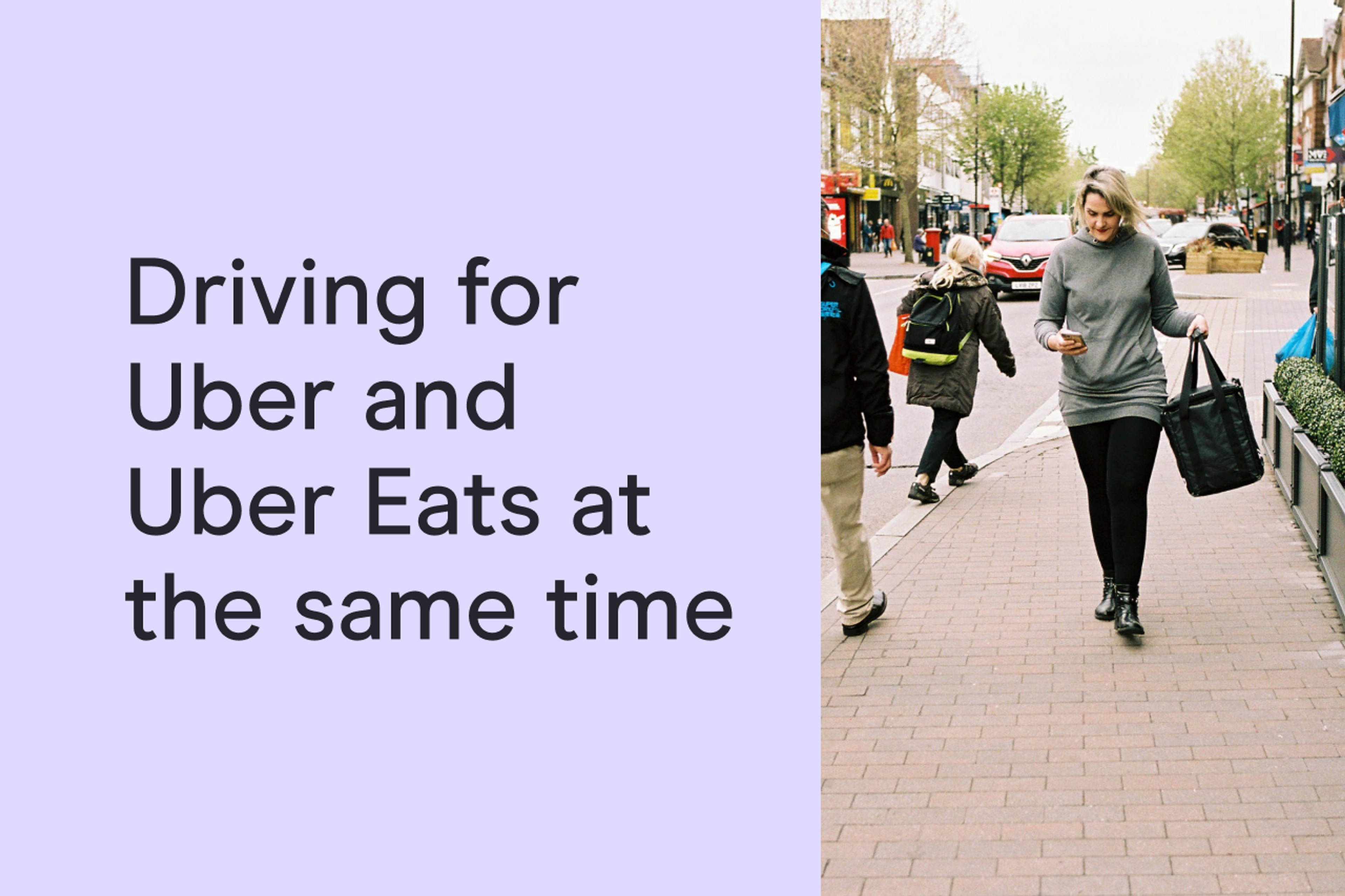
Yes, UK Uber drivers can work for both Uber rideshare and Uber Eats using a single driver app, toggling between passenger rides and food deliveries with a preferences setting inside the app. It's one of the easiest ways to add a second earning stream without managing two separate platforms.
In today's gig economy, there's a growing need for flexibility and new ways to earn. If you're already driving for Uber, or thinking of signing up, stacking Uber Eats on top of rideshare is one of the most common ways UK drivers lift their income without changing vehicles or apps. Here's the full breakdown.
Can you drive for Uber and Uber Eats at the same time?
Yes. Uber lets its drivers take on Uber Eats food deliveries alongside passenger rides, so you can do both within the same working week – or the same shift.
Riders and customers use two separate apps (Uber for rides, Uber Eats for food), but drivers use a single app for both services. That saves the hassle of juggling two platforms and reduces the chance of missed requests or confused schedules.
How do I sign up for Uber Eats if I'm already an Uber driver?
If you already drive for Uber, you don't need to reapply for Uber Eats. Inside the Uber driver app, there's an option to activate Uber Eats alongside your existing rideshare account. You can start delivering food in the same vehicle you already use for passenger rides.
Uber recommends having an insulated delivery bag to keep customers' food warm. Uber doesn't provide these directly, but they're widely available from online retailers for under £30. Delivering food that arrives hot typically leads to stronger ratings and more tips, which lifts your long-term earnings across both services.
Can I do rideshare and food delivery in the same shift?
Yes. The Uber driver app has a preferences toggle that lets you accept rideshare requests, delivery requests, or both. You can flip the switch between services without leaving the app, so a quiet afternoon for passengers can become a productive delivery run.
During rush hours, ride requests typically dominate. Over lunch and dinner, food delivery volume climbs. Keeping yourself open to both lets you match your working time to wherever the demand is strongest at that moment.
Uber's app logic also prevents you from receiving simultaneous requests for a passenger and a food delivery, so you're never asked to be in two places at once.
How do I transition from Uber Eats to UberX?
Going from UberX to Uber Eats is straightforward – you're already approved to carry passengers, so adding food delivery is a single in-app step. Going the other way takes more effort, because Uber needs to confirm your vehicle is fit to carry passengers.
That typically means a vehicle inspection, plus the right licensing for your city (a PCO licence in London, or the equivalent local authority private hire licence elsewhere). Once you've passed inspection and received the Uber-branded signage your city requires, you can start accepting UberX trips alongside your Uber Eats work.
Can I also work for other delivery apps?
Yes. As self-employed drivers, Uber partners can work for other gig platforms like Deliveroo, Just Eat, Amazon Flex and Bolt alongside Uber. Drivers stacking multiple platforms typically use one for the busiest windows and another to fill gaps.
The key is avoiding double-bookings. Accepting a job on one app while you're mid-trip on another leads to cancellations and lower ratings on both platforms, which hurts long-term earnings more than the extra stacked shift gains. For a side-by-side breakdown of how Uber stacks up against Amazon Flex specifically, our guide on how Uber compares to Amazon Flex for UK gig workers walks through licensing, vehicle requirements, and earnings differences.
How much can I earn driving for both Uber and Uber Eats?
UK Uber drivers typically earn around £13.54 per hour on average, according to Talent.com's 2026 UK salary data based on 10,000 reported salaries. Uber Eats drivers report similar hourly averages on the same dataset, though individual earnings on either service vary significantly by city, shift timing, and running costs.
For a deeper breakdown, our guides on typical UK Uber rideshare earnings and how much UK Uber Eats drivers make run through hourly, weekly and annual figures on each service.
Stacking both typically works because it covers different demand windows. Rideshare peaks at weekday commuter hours (7am–9am, 4pm–7pm) and weekend nights; Uber Eats peaks at lunch (noon–2pm) and dinner (6pm–9pm). Aligning your shift with the right service at the right time lifts net earnings without increasing hours.
What insurance do I need for Uber and Uber Eats?
Driving for either Uber rideshare or Uber Eats requires hire and reward (H&R) motor insurance on top of a personal social, domestic and pleasure (SD&P) policy. Standard personal car insurance doesn't cover paid passenger work or paid delivery work – and driving uninsured carries a £300 fixed penalty and 6 licence points under UK enforcement rules.
For drivers doing both, a single H&R policy that covers rideshare AND delivery is the simplest solution – it avoids the hassle of switching cover in line with which service you're working.
Uber-ready private hire cover from Zego is built around how UK Uber drivers actually work, with options that include private hire work, food delivery and personal use on a single policy. If your focus is primarily Uber Eats, Zego's Uber Eats cover is the direct sign-up route. Either way, you can get a quote in around a minute.
Frequently asked questions
Can I work for other delivery apps while also working for Uber Eats?
Yes. As a self-employed driver, you can work for multiple gig apps at the same time. The important bit is managing your time effectively so you don't accept overlapping orders across platforms. Juggling too many active requests leads to cancellations, which can drag your rating down on every platform you use.
What's the exact process to switch between Uber and Uber Eats?
Inside the Uber driver app, tap the preferences option (typically shown as two on-off switches). From there, choose to accept delivery requests, rideshare requests, or both. The app prevents simultaneous requests across services, so you won't be double-booked for a ride and a delivery at the same time.
What are the risks of working for both Uber Eats and Uber?
Working for both services maximises earning opportunities but carries a few small risks. If you've accepted both ride and delivery requests, you might occasionally have to cancel one because you've committed to the other. There's also the lingering-food-smell issue: delivering hot food for hours can leave your car smelling of takeaway, which some passengers find off-putting. Both risks are manageable with an insulated delivery bag, regular car ventilation, and sensible shift planning.
Does Uber rideshare pay better than Uber Eats?
It depends on your location, shift timing and customer demand. Some UK drivers earn more on rideshare thanks to higher base pay and surge pricing at peak hours. Others earn more on Uber Eats because food delivery customers tend to tip more often than passengers.
If you enjoy driving and chatting with passengers, rideshare may feel more rewarding. If you prefer the quiet simplicity of drop-off work, Uber Eats may suit you better. Most drivers who work both find that letting the app route them to whichever service has live demand gives the highest net over a full week.
References
Talent.com UK Uber driver & Uber Eats driver salary data (2026, based on 10,000 reported salaries) – WebFetch-verified. Cited for the UK average hourly earnings figure (£13.54/hour) used to benchmark realistic earnings across both Uber rideshare and Uber Eats. https://uk.talent.com/salary?job=uber+driver