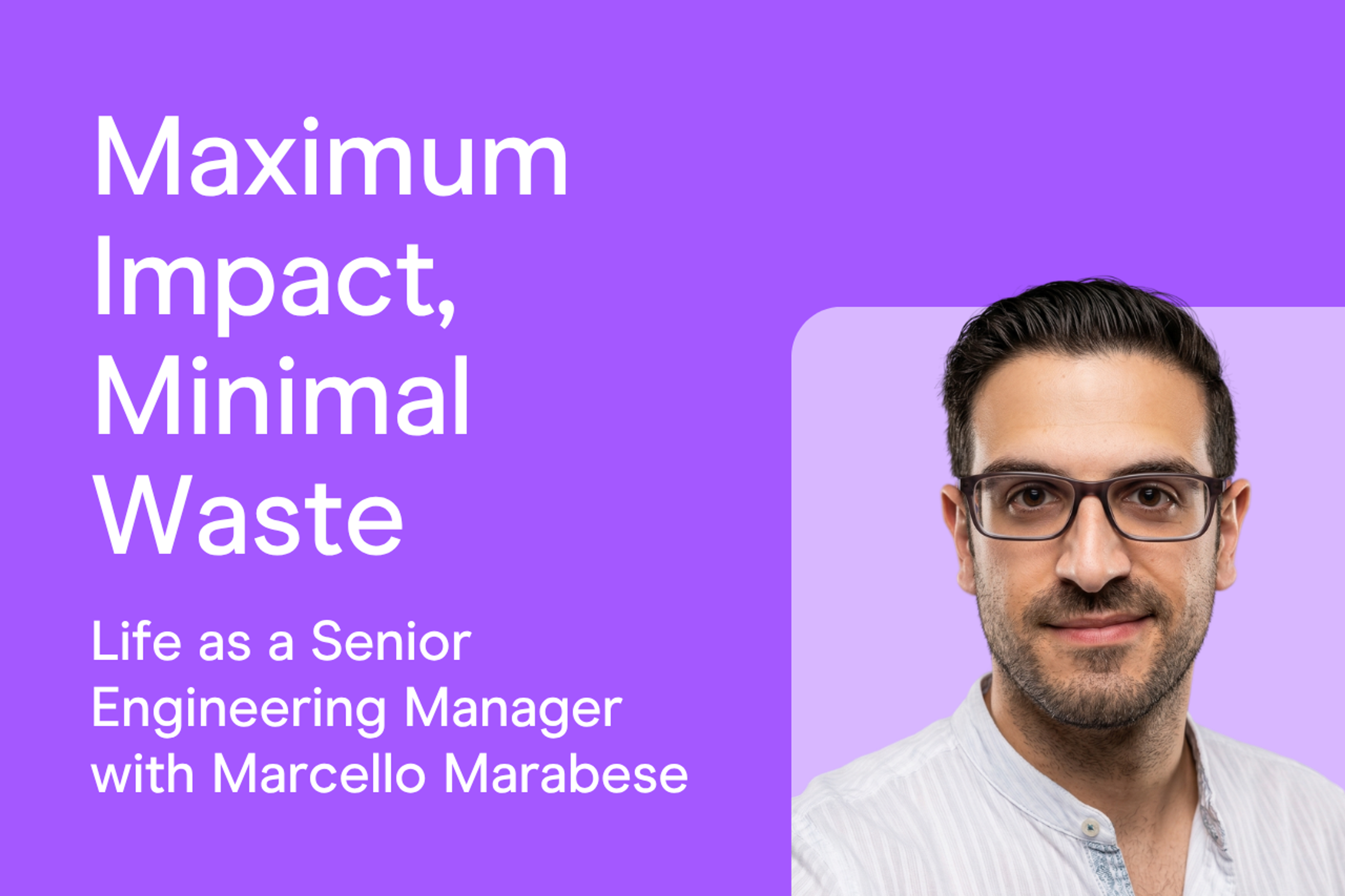
Tell us about your career before Zego. What specific expertise has been most useful here?
My career before Zego was incredibly varied, from embedded engineering in telecoms, to rebuilding the Domino's Pizza platform to working in green energy startups like Kaluza and tech giants like Microsoft.
This breadth of experience across small, medium, and large-scale tech companies in very different domains has (putting the technology itself aside) given me the skills to adapt quickly, spot areas where I can insert myself to make an impact, and get up to speed on a new domain fast. All of those have been really useful since joining Zego.
What specific technical challenge made you choose Zego over other opportunities?
What drew me to Zego was the combination of high-calibre talent and the sheer complexity of the domain. I saw an opportunity to work with people who had extremely strong career backgrounds and technical ability, knowing I'd be constantly learning.
The challenge of disrupting a traditional insurance industry with a fast-moving startup was exciting in itself and also the strategic engineering it demands, delivering high-impact increments, that can scale to compete with industry giants, and finding that balance between agility, robustness, and high-value output.
Describe a project where real-world insurance complexity met our tech capabilities. What was the hardest part to solve?
Our front-end architecture is a great example. It served us really well for a long time, but we eventually outgrew it, especially when we wanted to push things like conversion rates further. That meant understanding where friction was hitting our customers and getting deeply involved with A/B testing. The technical side of setting that up is one thing, but the harder part is interpreting what the data is actually telling you and making smart decisions from it.
Telematics is a good case in point: we ran tests to understand how users feel about it, whether they're worried about their data, and whether we're just not explaining it well enough. Often, the answer isn't a tech fix; it's about communicating a genuinely compelling product in a way that builds trust.
As a startup, you need to know that the time you invest is going to move the needle, and that's where the real complexity lives.
How does "High performance, done thoughtfully" show up in your peer reviews or code shipping?
For me, "high performance, done thoughtfully" comes down to maximum impact with minimal wasted effort. At a startup, you can't afford to build for months and hope it pays off, high performance means being intentional about what we say yes to. That starts with alignment:
I want the team to understand the "why" behind what we're doing, and if something doesn't line up with the vision, I'd rather challenge it early than waste time later. When we hit stumbling blocks, it's about measuring the trade-offs and finding pragmatic ways to keep delivering value rather than getting stuck. And probably the biggest piece is ownership.
High performance isn't waiting for someone else to solve the problem; it's spotting the bottleneck and proposing a better way forward.
Give an example of a time you were empowered to change a process or suggest a better way.
At Zego, leadership helps provide the "what" in terms of the goals, but trusts you to figure out the "how."
A good example is when I first joined. I came into a team that was really struggling with delivery on a project that had significantly overrun. I was empowered to start making changes very early on: refocusing the team, evaluating what we were working on and why, and stripping out what we genuinely didn't need. By doing that, we regained focus and a clear picture of how we could deliver the product and how long it would actually take.
It meant we could set expectations with the business that were meaningful, and the team started to build real momentum and confidence again. I didn't need to navigate layers of red tape, I just had to show that the changes would make us more effective. That kind of trust makes a real difference.
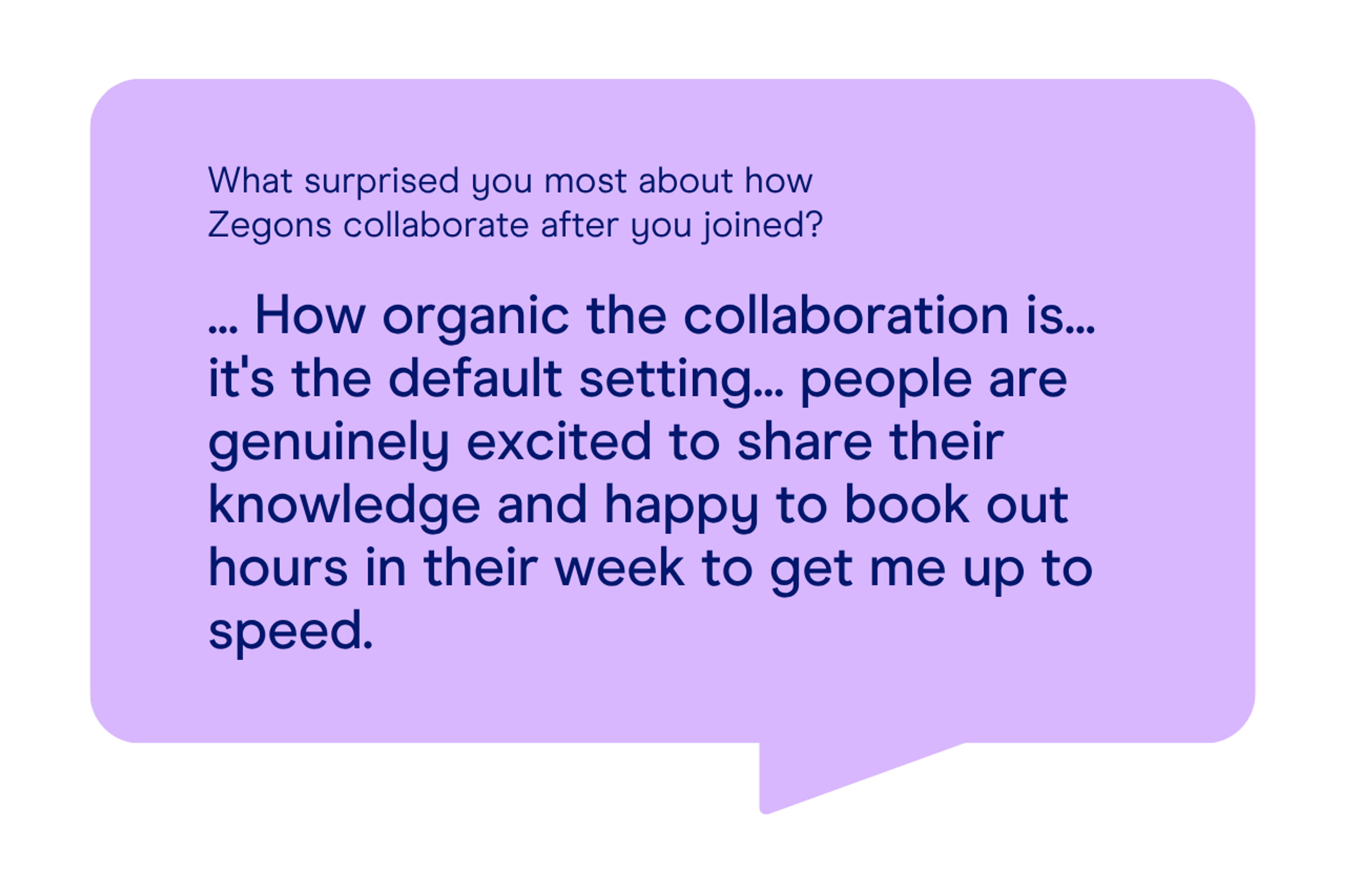
What surprised you most about how Zegons collaborate after you joined?
The biggest surprise was how organic the collaboration is. In many companies, cross-team work requires a lot of push.
At Zego, it's the default setting. When I joined, people were genuinely excited to share their knowledge and happy to book out hours in their week to get me up to speed. It never felt like anyone was having to accommodate me. That generosity with time and knowledge isn't something you find everywhere, and it makes a huge difference when you're getting to grips with a complex domain like insurance.
What technical project or launch over the next 12 months excites you most?
I'm particularly excited about the new finance system currently in development. It's a foundational piece of tech that's going to unlock a lot of potential for us. Beyond that, our shift to a new frontend architecture is going to modernise how we build. But the thing that excites me most is probably AI and how we're applying it to the way we work.
By targeting laborious workflows, we're freeing up our people to focus on high-value, creative problem-solving, and that feels like a genuine step change.
What advice would you give to someone moving from a traditional firm to Zego?
Be ready to move. A lot of companies say they're fast-paced, but at Zego, it's the actual reality.
We move quickly because we don't want to miss our window of opportunity, and that can feel like a big shift if you're coming from somewhere more traditional. My other piece of advice would be to come with a growth mindset. You're going to be learning constantly, whether that's a new domain, new tech, or just a different way of thinking about problems.
But you won't be doing it alone. The people here are genuinely generous with their time and knowledge, and that makes the pace feel exciting rather than overwhelming.