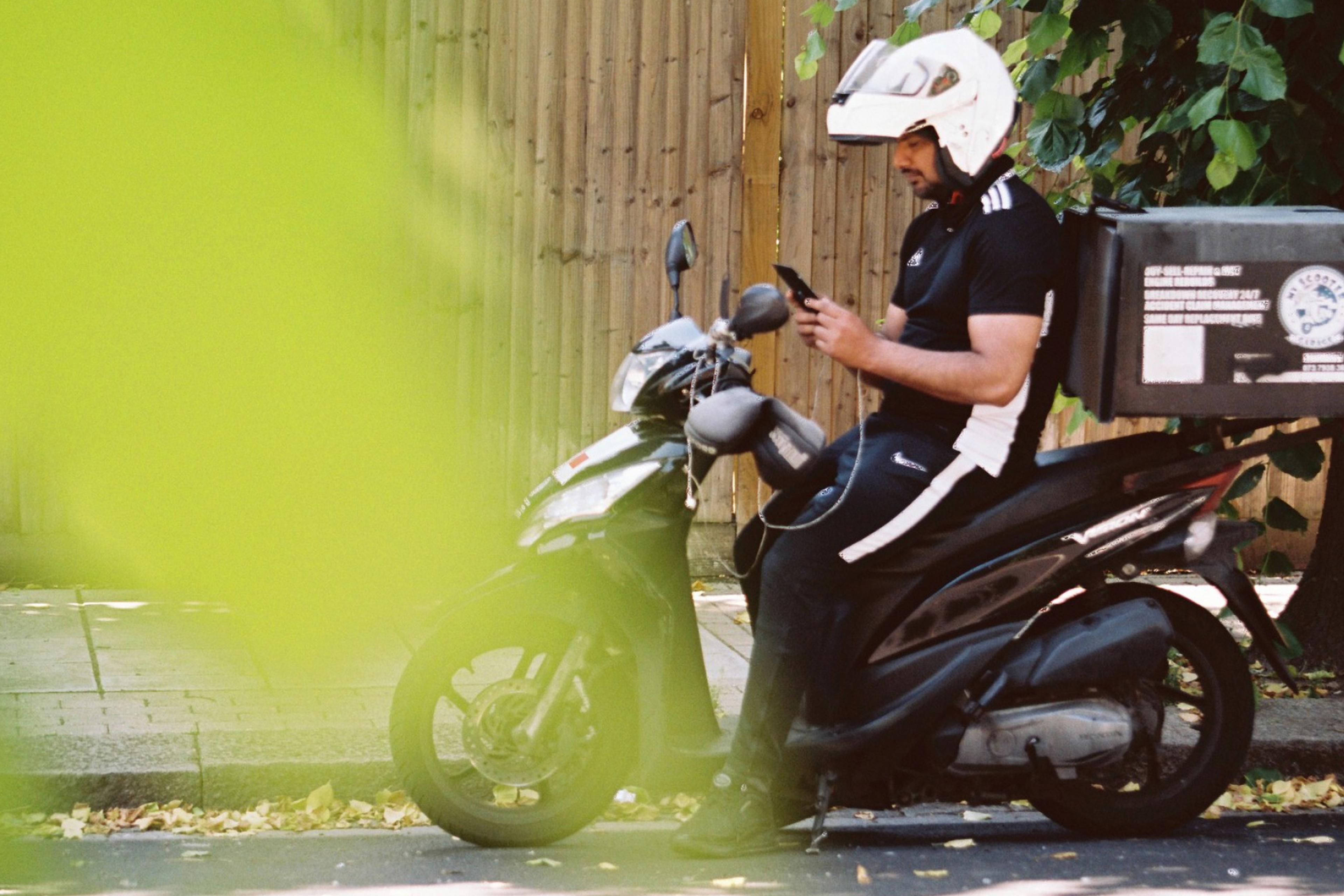
Food delivery insurance is the hire and reward (H&R) motor cover UK drivers legally need to deliver takeaway food or parcels for payment. It sits on top of a standard personal motor policy, or combines with it in an all-in-one policy, and covers the commercial delivery work that social, domestic and pleasure (SD&P) cover doesn't.
This guide walks through what food delivery insurance actually is, who needs it, the three main policy types, and what it costs to get covered in 2026.
What is food delivery insurance?
Food delivery insurance provides cover for drivers and riders who deliver takeaway food or parcels in return for payment, across cars, vans, motorbikes and scooters. It's known in the industry as hire and reward (H&R) insurance, and it's legally required the moment money changes hands for the delivery.
Deliveries can come through individual restaurants, local chains, or major platforms like Uber Eats, Deliveroo, Just Eat and Amazon Flex. The common factor is that delivering takeaway food for money is a commercial activity, and a standard personal motor policy doesn't cover it.
Why do you need food delivery insurance?
Food delivery insurance is a legal requirement for every UK food delivery driver under the Road Traffic Act 1988. Standard SD&P motor insurance doesn't cover commercial delivery work, so driving on a personal policy while delivering for payment can void your cover entirely.
According to the Association of British Insurers (ABI), "If you carry passengers who are charged a fare, you will need to ensure you have the appropriate level of 'hire and reward' insurance". The same principle applies to drivers carrying parcels or food for payment.
UK drivers have two practical options:
- Buy hire and reward (H&R) cover on top of their existing personal SD&P policy.
- Buy an all-in-one policy that combines SD&P and H&R on one document.
Parcel delivery is also covered by most food delivery policies. What's not covered is passenger transport for payment. That's private hire, and it needs a different policy entirely. For a deeper look at H&R as a category, our guide on UK hire and reward insurance breaks down how it works across different vehicle types.
How does food delivery insurance work?
Food delivery insurance comes in two main cover levels, both structured the same way as car insurance:
Third Party (or Third Party, Fire and Theft)
Third party only covers the other driver or party when an accident is your fault. The insurer pays to repair or replace their vehicle and property, and covers any legal liability for injuries. It does not pay to repair your own vehicle.
For delivery drivers, a written-off vehicle on a third party only policy can end your earnings overnight. Adding Fire and Theft extends the cover so the insurer pays out if your vehicle is stolen or damaged by accidental fire.
Fully Comprehensive
Fully comp is the highest level of cover. It protects third parties AND your own vehicle in an accident you cause. Most fully comp policies include fire, theft, windscreen cover, and protection for audio, communication and sat-nav equipment as standard.
Zego's food delivery insurance is available at either level, and can be linked instantly to your driver account with major delivery partners including Uber Eats, Deliveroo and Just Eat.
What policy types are available?
Zego offers food delivery insurance across three terms, so you can match the cover to how you actually work.
Pay-as-you-go hourly insurance
Ultra-flexible hire and reward cover you buy by the hour, paid via a top-up app. Suits drivers who work intermittently or only at peaks. For the full breakdown, our guide on how pay-as-you-go food delivery insurance works covers the mechanics.
30-day monthly insurance
Flexible short-term cover that matches seasonal or secondary-income work patterns. Common for drivers who also work in other industries and deliver in between.
Annual policies
Long-term cover for full-time delivery drivers. Typically the cheapest cover per day of actual work, and the right choice if you're delivering more than roughly 30 hours a week.
What do I need to buy food delivery insurance?
Food delivery drivers don't need a special driving licence. A standard full UK or EU licence typically qualifies for car drivers. Scooter and motorbike riders can deliver on a CBT permit with L plates, without needing a full motorbike licence.
Typical Zego food delivery insurance eligibility:
- Full UK or EU driving licence, or CBT for scooters (maximum engine size 125cc).
- No more than two claims in the last three years, regardless of fault.
- Aged 21 to 75 for car drivers (21 to 65 for scooter riders).
- You are the vehicle owner or registered keeper.
- You live and work in England, Scotland or Wales.
- Your vehicle is legally roadworthy (current MOT, valid tax).
Eligibility can change between products, so always verify current criteria in the Zego Delivery app before committing.
How much does food delivery insurance cost?
Food delivery insurance costs vary significantly based on vehicle, location, driver age, working hours and cover level. Annual premiums typically vary by hundreds of pounds between insurers, so shopping the market at renewal pays off. Our guide on current UK food delivery insurance costs walks through the typical ranges by cover type and working pattern.
How fast can I get covered with Zego?
Zego's food delivery insurance can typically move from quote to active policy in under 30 minutes. For car drivers, UK food delivery insurance from Zego covers work across Uber Eats, Deliveroo, Just Eat, Amazon Flex and other partner platforms, with pay-as-you-go, 30-day and annual options.
For scooter and moped riders, scooter insurance for UK food delivery riders covers riders on 125cc and under via pay-as-you-go, with combined SD&P and H&R policies available for scooters up to 500cc.
Get a quick quote with Zego, it only takes a minute.
References
Association of British Insurers (ABI) – Motor Insurance Guidance – WebFetch-verified. Cited for the UK insurance industry's definition of hire and reward cover and the legal requirement for drivers carrying passengers or parcels for payment to hold appropriate commercial motor cover. https://www.abi.org.uk/products-and-issues/choosing-the-right-insurance/motor-insurance/