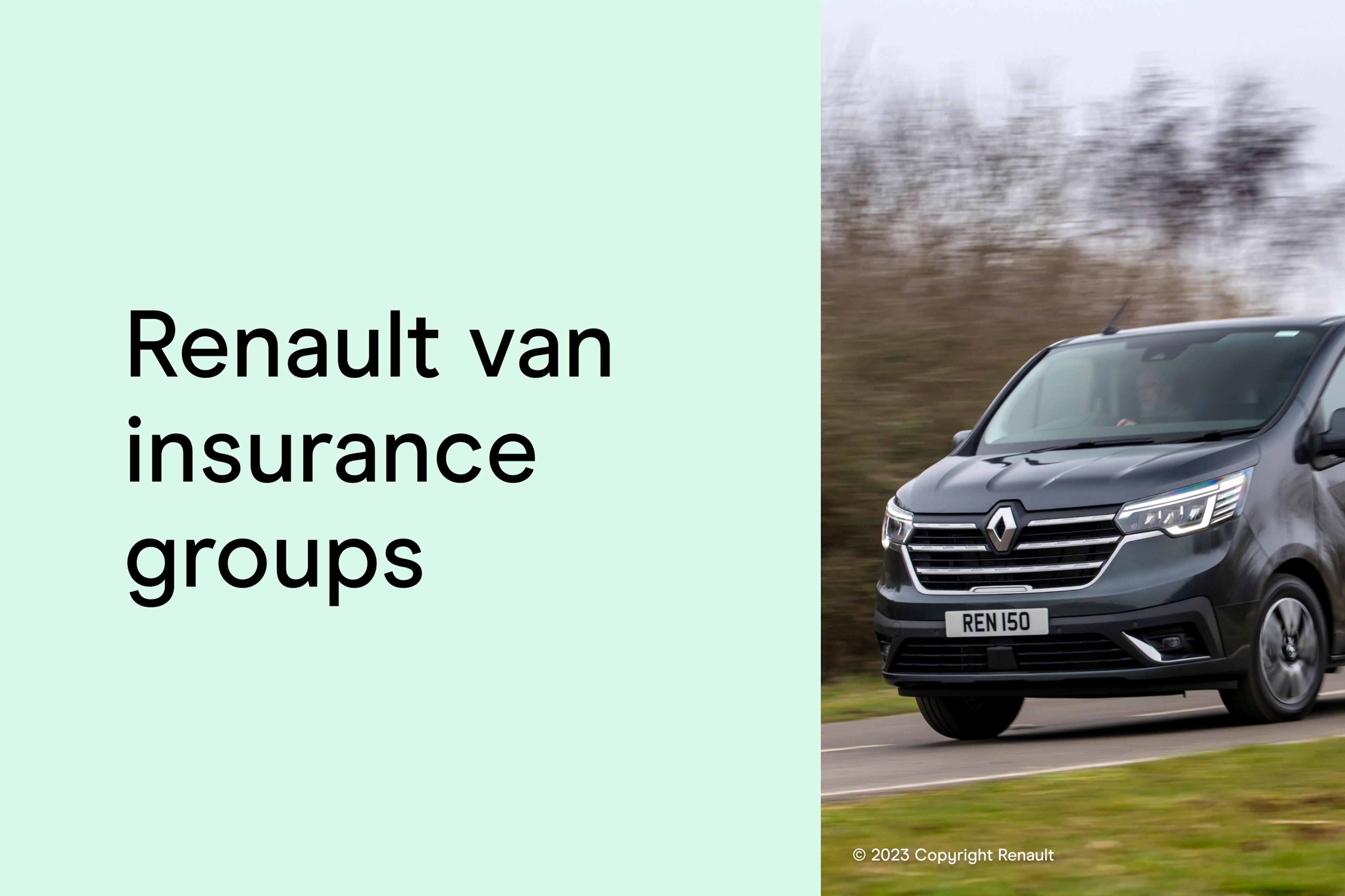
Renault vans fall into UK insurance groups between 2 and 49, depending on model, engine size, age and trim level. The Renault Kangoo typically sits in the lowest (cheapest) groups for light goods work, the Trafic in the middle, and the Renault Master in the highest groups for large commercial use. Choosing the right Renault van and knowing its group rating can shift annual insurance premiums by hundreds of pounds.
Renault offers one of the most comprehensive van ranges in the UK, covering everything from small last-mile delivery to full-size panel and conversion vehicles, and now with E-Tech electric variants across the line-up. This guide walks through how Renault vans are classified, what the current lineup looks like, and what changes are coming to the way UK vans are rated.
What are Renault van insurance group ratings?
In the UK, van insurance groups have historically run from 1 to 50, with Group 1 the cheapest for older vans and Group 21 the cheapest for vans registered after 2016 (when Thatcham Research updated the classification system to reflect the safety and repair-cost realities of modern vehicles).
Renault vans fall into different groups based on:
- Engine size and power
- Weight and payload capacity
- Repair costs (parts and labour time)
- Security features (locking systems, alarms, immobilisers)
Newer Renault vans often sit in higher groups than older ones because the technology, sensors and parts needed to repair them cost more. Improved safety features can offset some of that increase at the underwriting stage.
The Vehicle Risk Rating change
Thatcham Research is transitioning UK insurance classification away from the 1–50 Group Rating scale to a newer, more dynamic Vehicle Risk Rating system. The new system uses multiple assessment factors rather than a single group number, reflecting improvements in vehicle safety technology and repair economics. If you're buying a new Renault van in the next 12 months, expect insurance quotes to reference the new rating system alongside (or instead of) a traditional group number.
Renault Kangoo van insurance group
The Renault Kangoo is usually the cheapest Renault van to insure in the UK.
- Pre-2016 Kangoo models: typically in insurance groups 2–5.
- Post-2016 Kangoo models: typically in groups 22–35.
- Current lineup: the 3rd-generation Kangoo is available in diesel (starting from around £26,975) and as the Kangoo E-Tech electric variant (starting from around £34,435 after the Zero Emission Vehicle Grant).
Renault Trafic van insurance group
The Renault Trafic is a popular medium-sized panel van. Insurance groups vary significantly by age and engine size.
- Pre-2016 Trafic models: typically in groups 3–12.
- Post-2016 Trafic models: typically in groups 25–47.
- Current lineup: Trafic diesel starts from around £37,475, and the newly launched Trafic E-Tech electric variant is now available alongside.
For Trafic-specific cover, Renault Trafic van insurance is tailored to the model's profile with the right group rating and trim levels built in.
Renault Master van insurance group
The Renault Master is the largest van in Renault's UK lineup, used widely across couriers, tradespeople, and conversion specialists (campers, luton-body builds, refrigerated cargo).
- Pre-2016 Master models: typically in groups 10–18.
- Post-2016 Master models: typically in groups 35–49.
- Current lineup: Master diesel starts from around £42,275. Master E-Tech (electric panel van) starts from around £47,115 after ZEV Grant. Master E-Tech conversions start from around £45,315.
What about the new E-Tech (electric) Renault vans?
Renault's E-Tech electric variants (Kangoo E-Tech, Trafic E-Tech, Master E-Tech) typically sit in similar or slightly higher insurance groups than their diesel counterparts. Electric van insurance groupings reflect:
- Higher vehicle purchase price (and therefore higher repair / replacement cost).
- Expensive battery and drive unit components.
- Often fewer available mechanics trained on EV drivetrains, which can lengthen repair cycles.
That said, the Zero Emission Vehicle Grant brings the upfront cost of E-Tech Renault vans closer to diesel equivalents, and running costs (charging vs fuel, fewer moving parts) are typically lower. Insurance is only one part of the total-cost-of-ownership picture.
What affects Renault van insurance group classifications?
Beyond the make and model itself, several factors affect where a specific Renault sits in the groups:
- Engine size. Larger engines typically mean higher insurance groups.
- Weight and payload. Heavier vans generally cost more to insure because repairs are typically more involved.
- Repair cost economics. Vans with cheaper, more available parts typically fall into lower groups.
- Safety features. Advanced driver assistance systems (AEB, lane keep, blind spot monitoring) can help reduce group ratings on newer models.
- Security. Alarms, immobilisers, locking improvements and tracking systems can all shift the group rating downward.
How does registration year affect insurance groups?
Newer Renault vans tend to be placed in slightly higher groups than their predecessors because of the expensive technology and parts built into them — sensors, cameras, lane-keep systems and the bumpers that hold them all become costly to replace.
The trade-off: their improved safety features make them less likely to be involved in preventable accidents, and modern security systems make them less likely to be stolen. Over a full policy year, those factors can offset some of the higher repair-cost input and bring the net premium closer to a lower-group older van.
Frequently asked questions about Renault van insurance
What category of van is the Renault Trafic?
The Renault Trafic is classified as a medium-sized panel van, typically offering cargo space of around 5–9 cubic metres depending on body length and roof height.
How much does it cost to insure a Renault Kangoo van each year?
The amount you'll pay depends on your age, postcode, driving history, and whether the van is insured for personal or commercial use. For a personal policy, UK drivers typically pay somewhere in the region of £500–£800 a year on average. For business use, courier work, or hire and reward, the premium is typically higher.
What is the cheapest Renault van to insure?
The Renault Kangoo is typically the most affordable Renault van to insure, with models falling into the lower insurance groups (2–5 for pre-2016 and 22–35 for post-2016 models).
What insurance group is the Renault Master van in?
The Renault Master typically sits in groups 10–18 for pre-2016 models, and groups 35–49 for Master vans registered after 2016. The new E-Tech (electric) Master typically sits in a similar group range to its diesel equivalent, adjusted for battery and drivetrain cost.
Are van insurance groups being replaced?
Thatcham Research is in the process of transitioning UK insurance classification away from the traditional 1–50 Group Rating scale to a new Vehicle Risk Rating system that uses multiple assessment factors. Over the next 12–24 months, expect UK insurance quotes to reference both systems in parallel.
Other van model insurance groups
For model-specific breakdowns of other common UK vans, see:
Get Renault van insurance with Zego
If you use your Renault Kangoo, Trafic or Master for trade work, Zego's business van insurance is built around tradespeople carrying their own goods, with Fully Comprehensive cover as standard and telematics-based renewal pricing for safer drivers. For delivery and hire and reward work, a courier van policy is the right fit instead.
Get a quick quote with Zego, it only takes a minute.
References
Thatcham Research – Insurance Group Rating – WebFetch-verified. Cited for the UK insurance group framework (1–50 scale), the post-2016 classification change, and the transition from Group Rating to the new Vehicle Risk Rating system. https://www.thatcham.org/what-we-do/insurance-group-rating/