Working as a delivery driver can be a good option if you’re looking for a more flexible way to earn extra money. But what happens if you don't have courier insurance?
As a courier, it’s your responsibility to make sure your vehicle is covered with the right type of insurance. If you get caught without courier insurance, you could end up getting stopped by the police. And, if you need to make a claim on your policy, it might not be valid.
In this guide, we'll cover more on the topic of courier insurance, and tell you how to get started as a delivery driver.
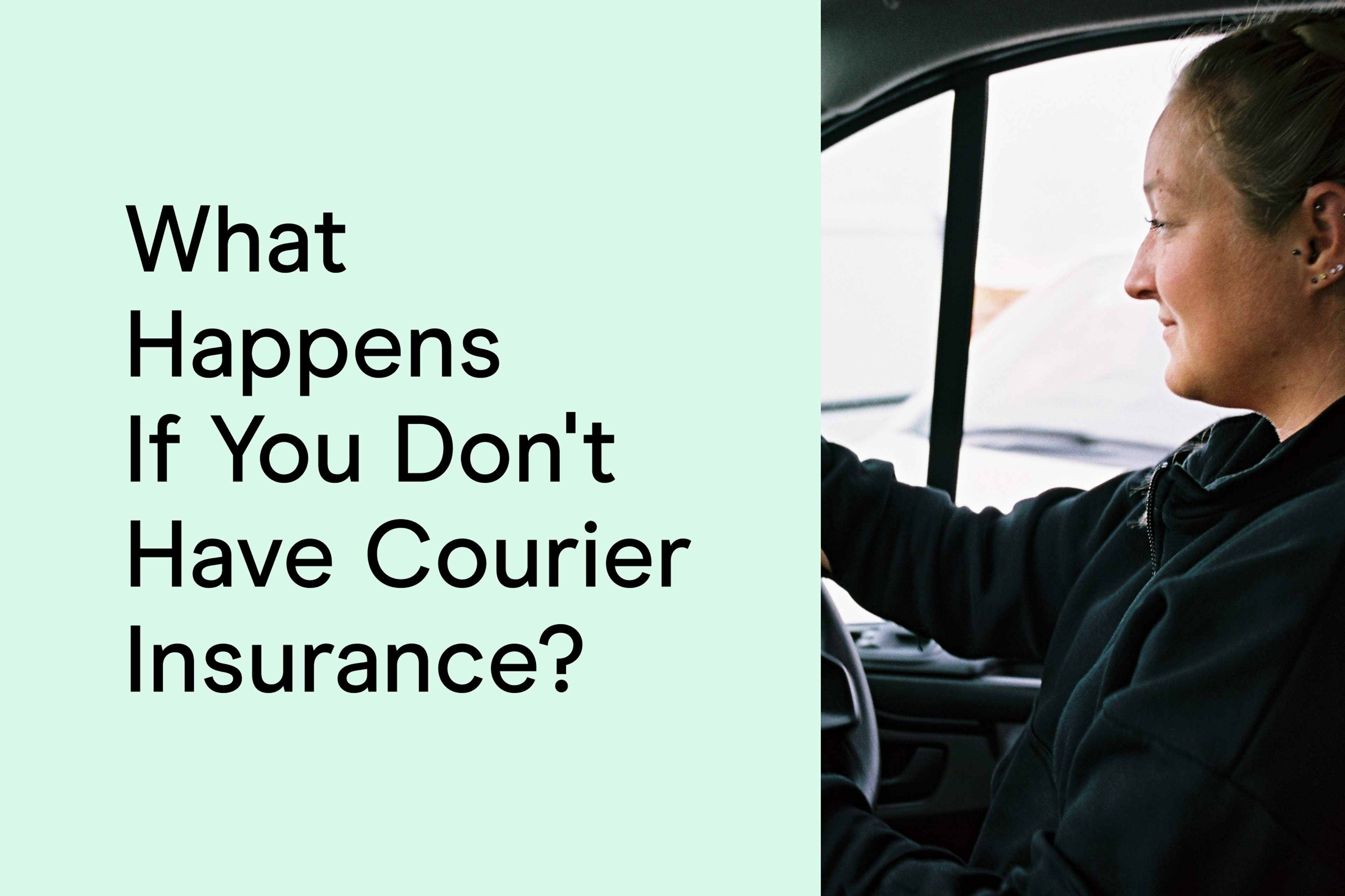
Delivering food or parcels for payment without courier insurance is illegal in the UK, and drivers caught doing so face a £300 fixed penalty, 6 points on their licence, and the risk of having their vehicle seized. Your standard social, domestic and pleasure (SD&P) motor policy doesn't cover paid delivery work, so specialist hire and reward (H&R) cover is required the moment you start earning money from delivering food, goods or passengers.
If something happens to one of your parcels, or you're involved in an accident while on a shift, courier insurance is what covers the costs. Without it, you're on the hook personally – and you face the enforcement consequences on top.
Is courier insurance a legal requirement?
Yes. Hire and reward (H&R) motor insurance is a legal requirement in the UK under the Road Traffic Act 1988 for any driver carrying goods or passengers in exchange for payment. That applies whether you're delivering hot food from a restaurant, dropping parcels for Amazon Flex, or carrying fare-paying passengers.
Zego's food delivery insurance is an H&R policy that includes public liability cover as standard, which is typically required by major platforms like Uber Eats, Deliveroo and Just Eat before you can start taking jobs. If you're new to the term, our explainer on what hire and reward insurance actually covers walks through why commercial delivery work can't be done on a personal policy.
What happens if you get caught delivering without courier insurance?
If police catch you delivering without the right cover, the consequences stack up fast. According to gov.uk's current driving-without-insurance guidance, the fixed-penalty consequences are:
- £300 fixed penalty and 6 penalty points on your licence (DVLA endorsement code IN10).
- Unlimited fine and disqualification from driving if the case escalates to court.
- Police have the power to seize, and in some cases destroy, the vehicle they catch you driving without insurance.
On top of the enforcement consequences, there's the financial exposure if you have an accident. Without the right cover, you can end up personally liable for damage to your vehicle, damage to the goods you're carrying, third-party injury or damage, and any legal fees if a third party sues you. A single uninsured trip can easily turn into a five-figure bill. Our breakdown of the penalties for driving without insurance in the UK goes deeper on how fixed-penalty points and court outcomes play out.
The "I didn't know I was uninsured" defence doesn't typically help either. If your policy has lapsed, or you're delivering for payment on a personal SD&P policy without realising it doesn't cover commercial work, you're still liable at the roadside.
How do police detect uninsured delivery drivers?
UK police use Automated Number Plate Recognition (ANPR) to check vehicles against the national insurance database in real time. A patrol car passing an uninsured van, or an ANPR camera catching one on a main road, can flag the offence instantly.
On top of ANPR, police look for telltale signs: a food-storage box on the back of a scooter, a driver delivering to a private address in branded delivery kit, or a car idling outside a restaurant in obvious pick-up mode. If the police database doesn't show appropriate H&R cover, the enforcement consequences follow.
What type of insurance do food delivery drivers need?
For food delivery, you need a hire and reward (H&R) insurance policy. H&R is a specific type of commercial motor insurance that covers you for delivering food, goods or passengers in exchange for payment. It's distinct from "business use" on a standard policy, which covers commuting or driving to business meetings but not commercial carriage of goods.
"Business insurance" is an umbrella term used to describe all business insurance policies. Hire and reward is a specific type of insurance not typically included in standard business insurance policies, so it's always worth checking your policy carefully before you start work.
A common worry is dual insurance. Having both an SD&P policy (for personal driving) and a separate H&R policy (for delivery work) isn't dual insurance, because the two policies cover different risks – personal use versus commercial use. There's no overlap, and nothing to flag to either insurer.
Why is courier insurance so expensive?
Courier insurance is priced higher than standard motor cover because delivery drivers cover more miles in busier areas at busier times, which statistically increases accident risk. The main factors that influence the price are:
- Driver age and experience. Younger drivers typically pay more because they're statistically more likely to be involved in an accident.
- Driving record. Previous convictions, motoring points or past claims lift the premium.
- Type of vehicle. A van, scooter and car all price differently, and specific makes and models carry different insurance group ratings.
- Voluntary excess. Agreeing to pay more upfront in the event of a claim typically brings the headline premium down.
- Annual mileage. Higher mileage means more time on the road, more wear and tear, and more exposure to risk.
- Working hours. Courier work often runs late into the night, when fatigue and visibility both affect accident risk.
- Time pressure. Delivery deadlines can lead to riskier driving, which insurers price in.
- Where you live. A busy city typically costs more to insure in than a quieter town, because there are more cars on the road to have accidents with.
Do I need courier insurance if I deliver on a bicycle?
Yes. If you use a bicycle to deliver food in exchange for payment, you typically need hire and reward cover. The principle is the same as for motorised delivery: the commercial activity is what triggers the cover requirement, not the vehicle.
How do I know if I already have courier insurance?
Check with your insurer or your platform provider to see whether you're covered for commercial delivery. Many personal motor policies look like they include "business use" but don't stretch to hire and reward, so read the policy wording carefully. If you can't see H&R spelled out explicitly, you probably don't have it, and you shouldn't start taking paid deliveries until you do.
What delivery insurance options does Zego offer?
For car delivery drivers, Zego Flex delivery insurance covers Uber Eats, Deliveroo, Just Eat, Amazon Flex and other partner platforms, with pay-as-you-go cover charged by the hour, 30-day cover for seasonal work, and annual cover for full-timers.
For scooter and moped riders, Zego's scooter delivery insurance covers riders on 125cc and under via pay-as-you-go, with combined SD&P + H&R policies available for scooters up to 500cc.
Whichever format fits how you work, you can download the Zego Delivery app and get a quote in around a minute.
References
UK Government – Driving without insurance penalties (gov.uk) – WebFetch-verified. Cited for the £300 fixed penalty, 6 penalty points, unlimited court fines, disqualification, and police powers to seize or destroy uninsured vehicles. https://www.gov.uk/vehicle-insurance/driving-without-insurance