Are Electric Cars Worth It for UK Delivery Drivers? Top 5 for 2026
Petrol hit an average of 157p a litre across the UK in April 2026, per RAC Fuel Watch. For a full-time delivery driver doing 25,000 miles a year, that's the difference between paying around £3,500 a year on fuel in a Toyota Prius and roughly £600 in an EV on a cheap home tariff. The question every Deliveroo, Uber Eats, and Amazon Flex driver is now asking is whether the higher purchase price, the insurance loading, and the charging logistics make up the gap. The honest answer: it depends on your setup.
Below is the short answer to "are EVs worth it for delivery driving?", the five electric cars that actually earn their keep on UK delivery shifts, and the buying criteria that decide whether the maths works for you specifically.
Short answer: are EVs worth it for delivery drivers?
Yes, electric cars can be worth it, if you have home charging access and you do at least 15,000 miles a year for your deliveries. Running cost drops from roughly 13–14p a mile in a Prius to 2–4p a mile in an EV on a cheap overnight tariff. For a typical full-time delivery driver that's £2,000–£3,000 a year saved on fuel before tax. Hire and reward insurance is slightly higher than petrol equivalents in 2026 (~10–15% more, per Thatcham), but not enough to flip the maths.
They probably arent worth it worth it if you don't have a driveway or workplace charger, if you do mostly rural or motorway work, or if you drive under 8,000 miles a year. Public rapid charging at 70p+ a kWh closes the running-cost gap to roughly zero, and a hybrid Prius beats an EV on total cost of ownership at low mileage. Stick with the Prius in those cases. It's still the smart choice for plenty of drivers.
If you're in the "yes" camp, here are the five EVs worth considering.
The 5 EVs at a glance
Number | Car | Used price | WLTP range | Boot | Insurance group | Best for |
|---|---|---|---|---|---|---|
1 | Nissan Leaf | £10k–£18k | 168–239 mi | 435L | 21–27 | Multi-app workhorse |
2 | Kia Niro EV | £18k–£28k | 282 mi | 475L | 27–30 | Amazon Flex / parcel |
3 | MG4 EV | £20k–£27k new | 218–281 mi | 363L | 27–29 | Drivers buying new |
4 | Renault Zoe | £8k–£14k | 146–245 mi | 338L | 16–24 | City food delivery |
5 | Vauxhall Corsa Electric | £14k–£20k | 222 mi | 309L | 26–28 | Stepping up from a Corsa |
Running cost figures throughout assume mixed charging (mostly home, occasional rapid) at typical 2026 UK prices and around 4 miles per kWh real-world efficiency.
1. Nissan Leaf — the proven workhorse
Best for: drivers who flip between Deliveroo dinner shifts, Amazon Flex blocks, and the occasional Uber Eats run. Anyone who needs a do-everything car without spending Tesla money.
The Leaf has been on UK roads since 2011 and a used 40 kWh model from 2018 onwards now sits in the £10k–£14k bracket. The newer 62 kWh Leaf e+ pushes that closer to £18k but stretches WLTP range to 239 miles, which translates to roughly 200 in real-world delivery work with the heater on. The 435-litre boot is the biggest in this list outside the Niro and will swallow an XL Deliveroo bag plus a stack of small Amazon parcels.
Running cost on a 7p overnight tariff comes out around 1.75p a mile. Mixed home and rapid charging closer to 8p.
Pros
- Strongest used market of any EV in the UK; easy to find with a clean service history
- Big boot for a hatchback, fits parcel and food bags
- Reliable powertrain; few mechanical horror stories on the 40 kWh battery
Cons
- Older models use CHAdeMO for rapid charging, which is being phased out of new charge points
- Battery cooling is passive, so heavy rapid charging on summer shifts can degrade the pack faster than rivals
- The ProPilot driver assist on older trims is mediocre
2. Kia Niro EV — the parcel and Amazon Flex pick
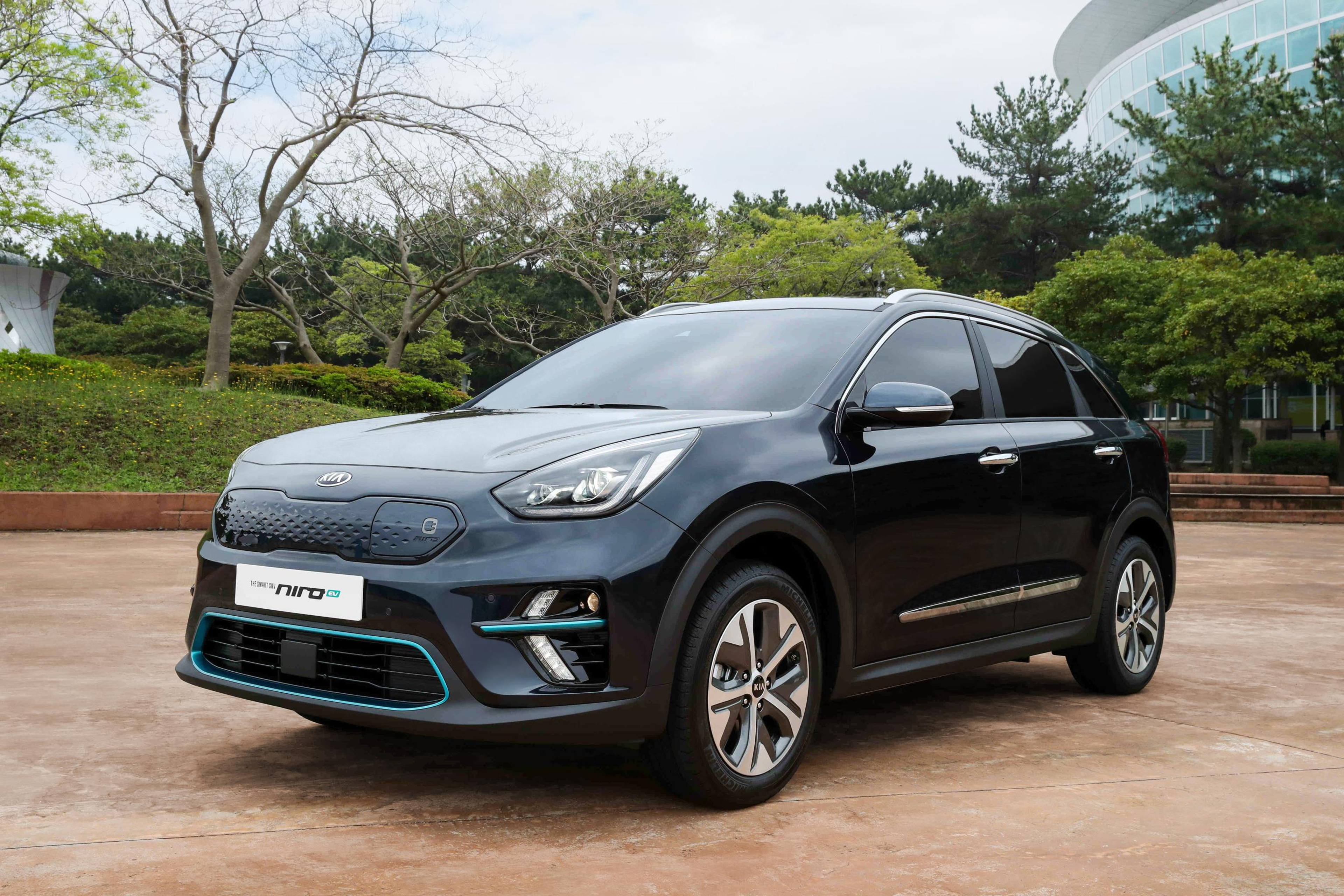
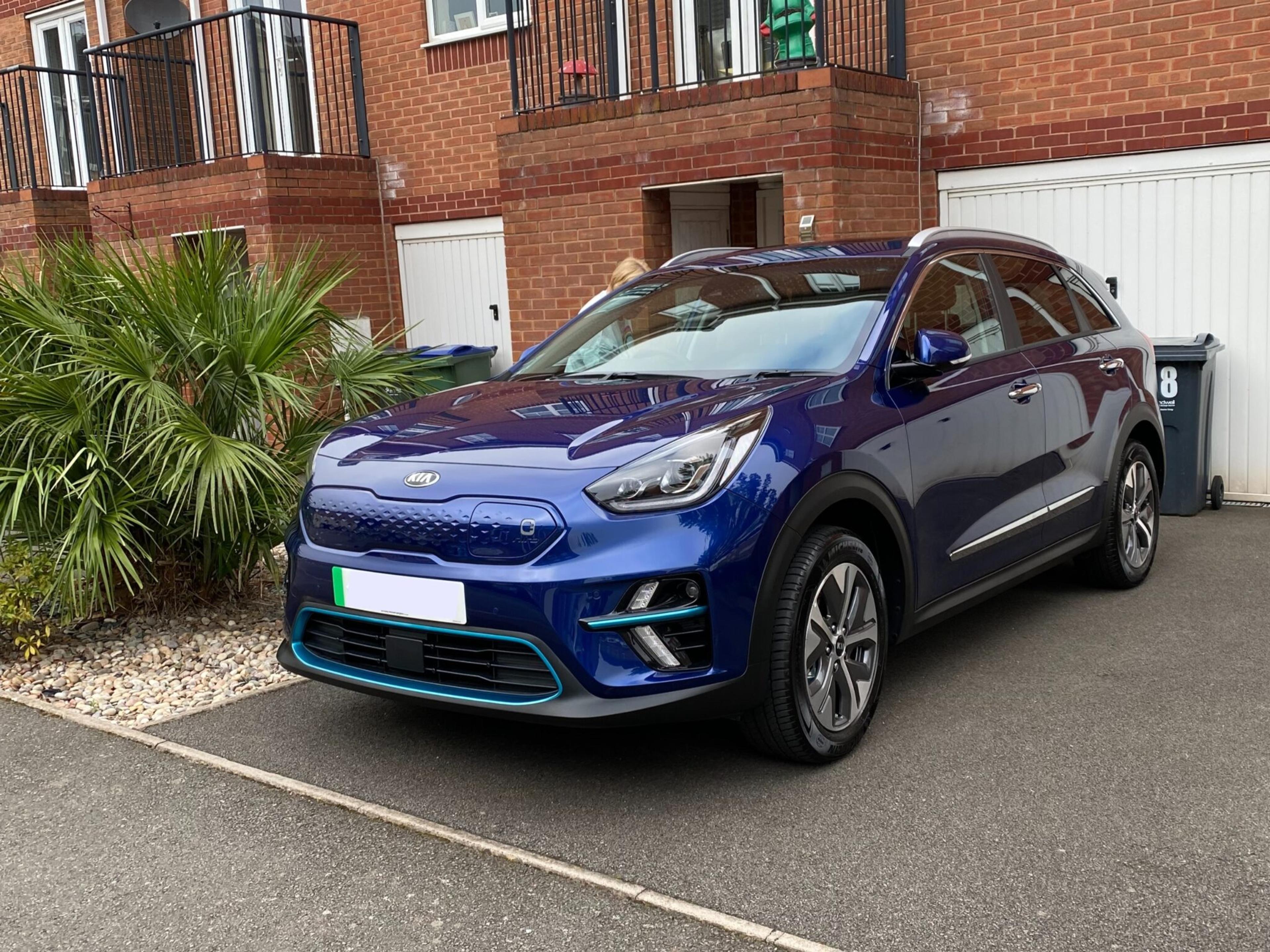
Best for: parcel couriers and Amazon Flex drivers who need real cargo space and don't want to drive a van.
The Niro EV's 475-litre boot is the largest on this list and the closest you'll get to a small estate in EV form. With the rear seats folded it climbs above 1,400 litres, which matters if you're running back-to-back Flex blocks. WLTP range is 282 miles, and the seven-year Kia warranty (transferable to subsequent owners) is the longest of any mainstream EV.
Used prices sit in the £18k–£28k range depending on year and trim, a step up from a Leaf but cheaper than a Tesla Model 3. Running cost on mixed charging is roughly 8p a mile. The 77 kW DC peak charging speed gets you from 10% to 80% in around 45 minutes.
Pros
- Biggest practical boot of any EV in this list
- 7-year warranty, including the battery, transferable to next owner
- Comfortable for long shifts; better seats than the Leaf
Cons
- Pricier entry point than a Leaf; used market is thinner
- DC charging peaks at 77 kW, so newer Hyundai and Kia models on the E-GMP platform (EV6, Ioniq 5) will outpace it at rapid chargers
- Slightly heavier on tyres than smaller rivals
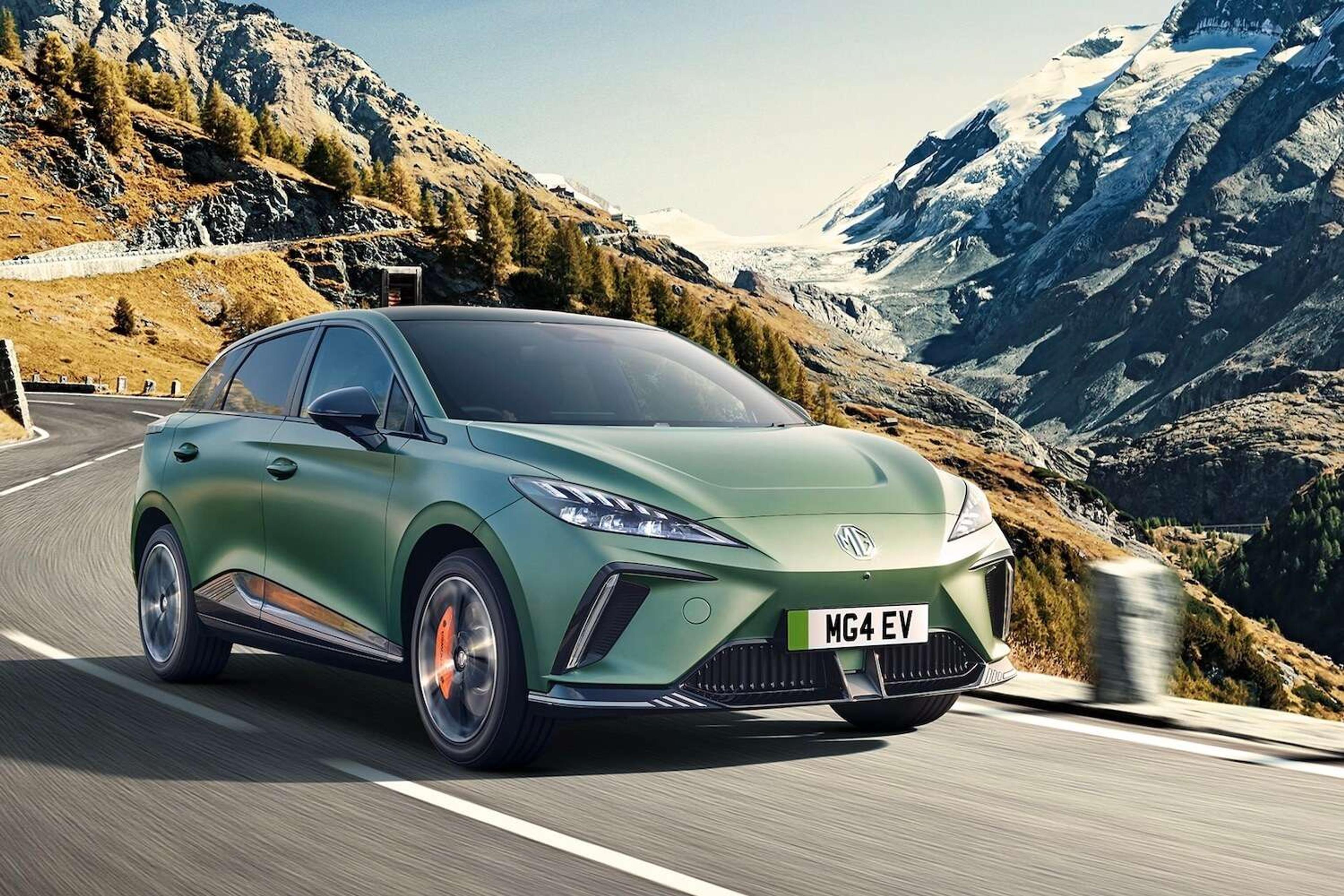
3. MG4 EV — the best-value new car
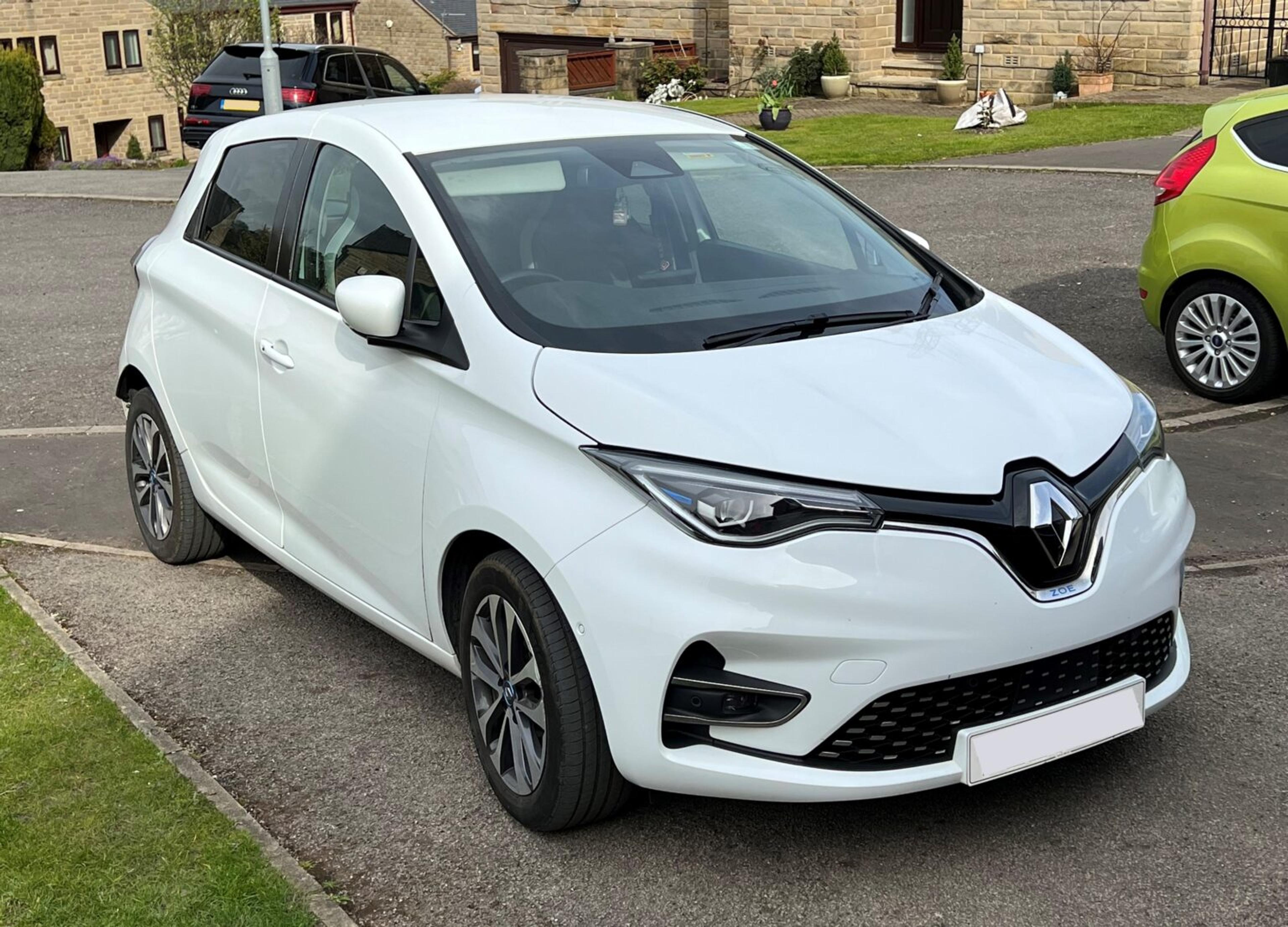
Best for: drivers who want to buy new (not used), who do reliable full-time delivery work, and want the longest possible warranty on a car they plan to keep.
The MG4 starts under £27,000 new and the Long Range trim manages 281 miles WLTP. The 363-litre boot is mid-pack but enough for most food and parcel work. MG offers a seven-year/80,000-mile warranty on the car and battery, a useful hedge against high-mileage delivery use.
The watch-out is residual value. MG resale is still less predictable than Korean or German rivals, so if you plan to flip the car after 18 months you may take a depreciation hit. If you plan to keep it for five years and rack up miles, the maths works.
Pros
- Cheapest new EV with usable delivery range
- 7-year warranty matches Kia and Hyundai
- 281 miles WLTP on Long Range trim is enough for a 10-hour Amazon Flex day with one rapid top-up
Cons
- Used market is still thin (the car only launched in late 2022)
- Residuals less proven than mainstream brands
- Interior plastics feel cheaper than rivals at this price
4. Renault Zoe — the cheapest legitimate way in
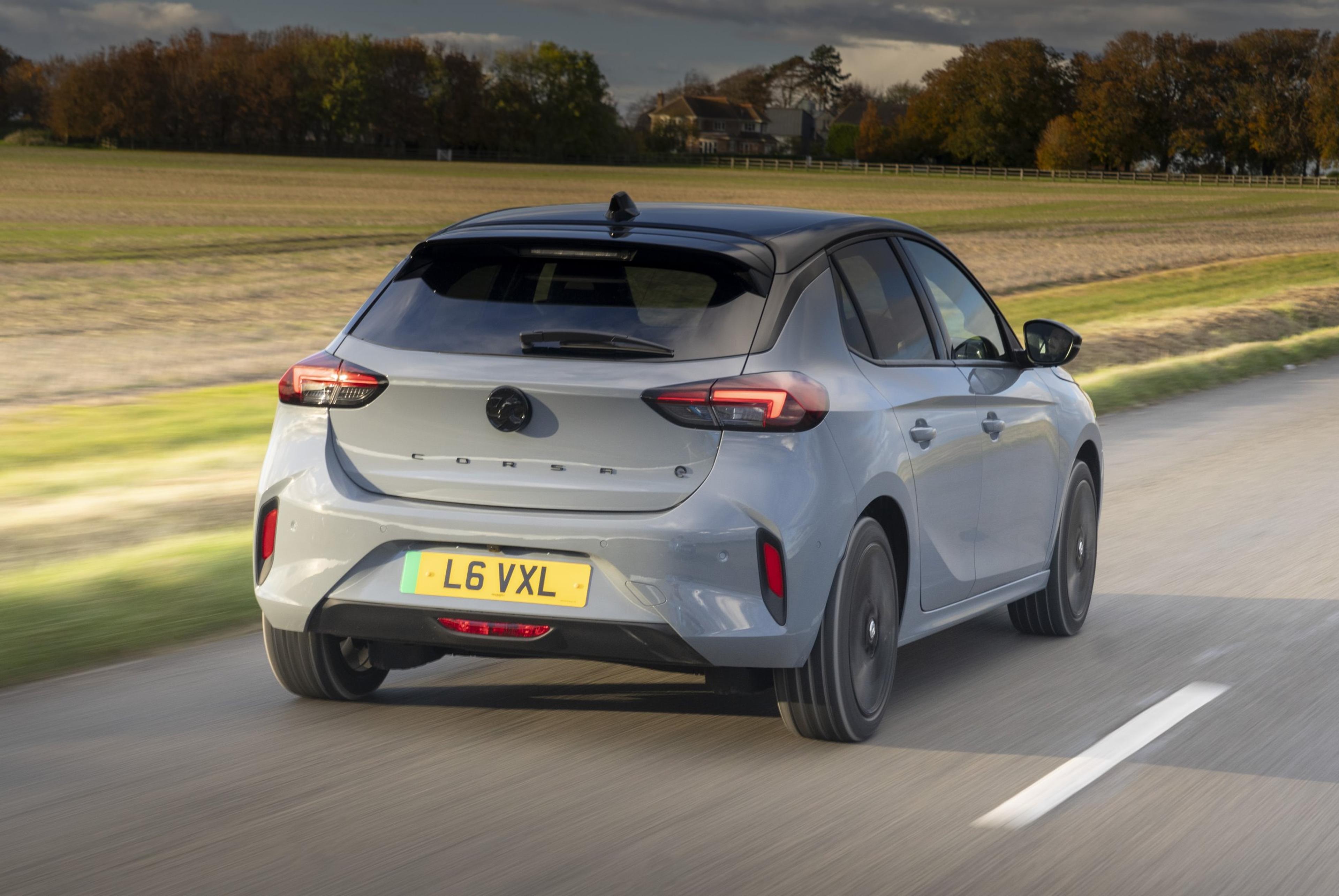
Best for: drivers who exclusively do short-trip city food delivery (Deliveroo, Uber Eats, Just Eat) and want the lowest possible entry cost.
A 2019 or 2020 Renault Zoe ZE40 sits in the £8k–£11k bracket. A newer ZE50 with a 52 kWh battery and a real-world 200-mile range can be found around £12k–£14k. It's a five-door supermini, easy to park outside busy restaurants, and the running cost is the lowest in this list at around 1.5p a mile on a cheap home tariff.
The catches are real. Older Zoes had a battery lease arrangement where you didn't own the battery outright; check the V5 carefully on anything pre-2020. Boot space is 338 litres, which is fine for food bags but tight for parcel work. Build quality is functional rather than premium.
Pros
- Genuinely the cheapest way to switch from petrol to electric
- Tiny running cost on home charging
- Easy to park, easy to drive, no learning curve from a petrol Corsa or Fiesta
Cons
- Check battery ownership status on the V5 if it's a pre-2020 car
- Smaller boot than the Leaf or Niro
- Older models have slower rapid charging (50 kW peak) and known issues with CCS reliability
5. Vauxhall Corsa Electric — the natural step up
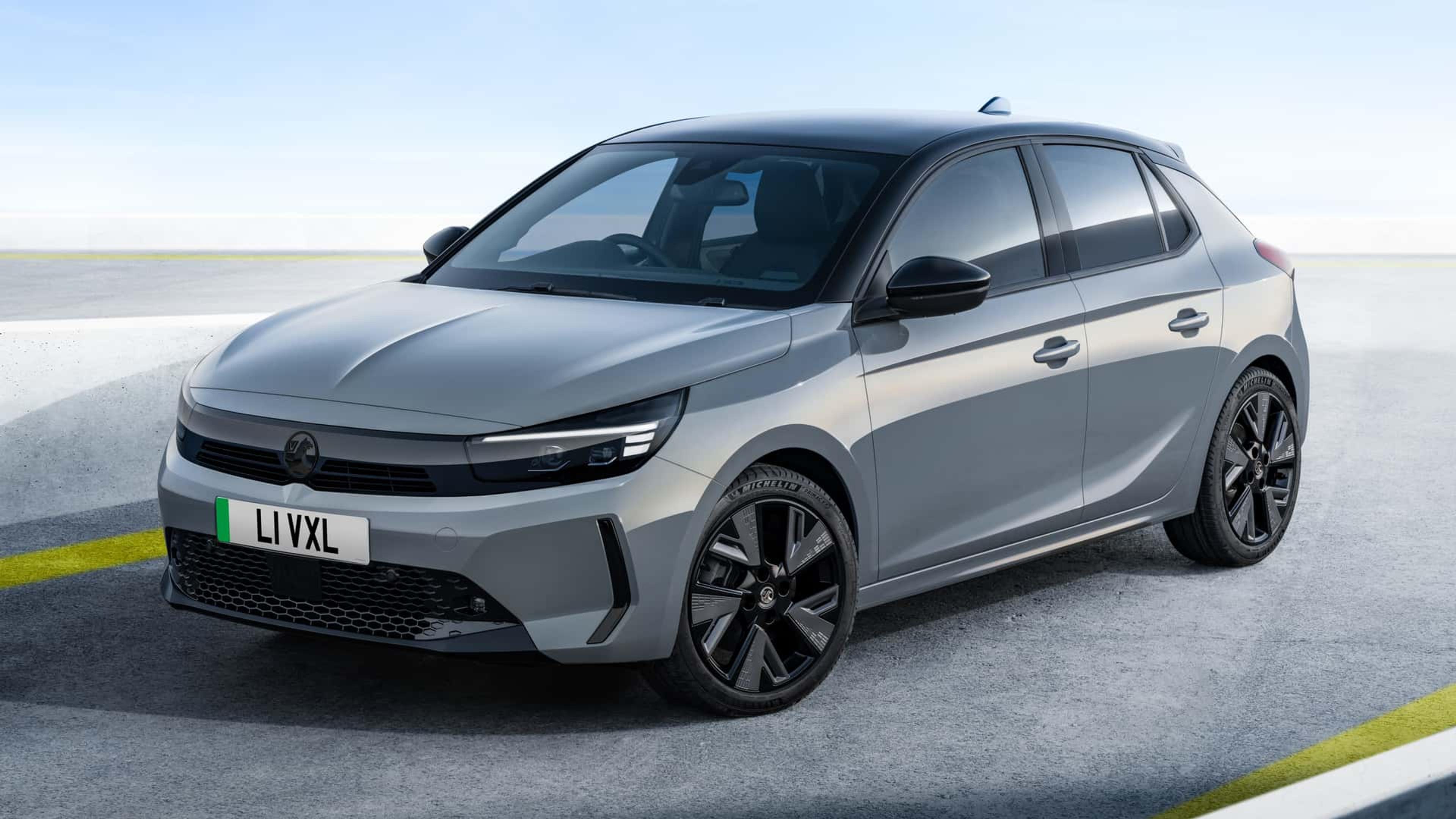
Best for: existing Corsa drivers who already know they like the size, the visibility, and the build, and want the lowest-friction switch to electric.
The Corsa is already one of the most common cars in UK delivery fleets, so the electric version is the path of least resistance for drivers who don't want to relearn a new car. WLTP range is 222 miles on the newest 51 kWh version, the boot is 309 litres, and the 100 kW DC charging speed gets you to 80% in around half an hour.
Used examples in the £14k–£20k bracket are now plentiful. Insurance groups sit around 26–28, mid-pack for an EV of this size.
Pros
- Familiar size and feel for drivers stepping up from a regular Corsa
- 100 kW DC charging is faster than the Leaf or Niro EV at rapid chargers
- Plentiful UK used market
Cons
- Smallest boot of the five, which limits parcel work
- Less range than the Niro, MG4, or newer Leaf e+
- Not as cheap to buy as a used Zoe of similar age
How we picked these five
Five criteria, applied in order:
Real-world range above 150 miles. Anything less is unworkable for a full delivery shift without mid-shift charging.
Boot space above 300 litres so the car can handle parcel work as well as food delivery.
Insurance group at or below 30. Higher groups push annual hire and reward premiums past £2,500 and the maths stops working against a hybrid.
A used market that actually exists in the UK, with verifiable service history. EVs too new to have a used market are speculative bets.
Charging speed above 50 kW DC peak, so a rapid top-up between shifts is genuinely useful.
That filter rules out the Tesla Model 3 and Model Y (boots just about big enough, but insurance groups 48–50 push H&R premiums brutally high for low-margin delivery work), the Fiat 500e (range too short, boot too small), the Hyundai Ioniq 6 (gorgeous but too pricey and too new on the used market), and most premium EVs across the board.
What to actually check when picking an EV for delivery work
Six things matter more than the marketing brochure.
The pence-per-mile maths. Calculate it for your actual situation. If you have a driveway and a cheap overnight tariff, an EV is dramatically cheaper than a Prius. If you have to rely on public rapid charging at 75p a kWh, the EV's cost advantage disappears entirely. The full breakdown of UK EV running costs in 2026 shows how much that figure can swing based on charging mix alone.
Boot dimensions vs your platform. Food delivery bags are tall but small. Amazon Flex parcels are mixed sizes. Multi-drop parcel work needs depth more than width. Measure your typical haul before deciding the Zoe is big enough.
Insurance group reality. Hire and reward cover for delivery work is priced based on the standard insurance group plus a delivery loading. A car in group 28 will cost noticeably more to insure for delivery than a car in group 22, all else equal. The gap between EV and petrol cover has shrunk to roughly 10–15% in 2026, but it's still real. Check before you buy.
Battery State of Health on used cars. Anything over 60,000 miles, request a battery health report. Most main dealers can run one. A degraded battery costs £8,000+ to replace; a healthy one will outlast the rest of the car.
Home charging access. Be honest. If you live in a flat with no driveway and the nearest rapid charger is 15 minutes away, an EV will cost you time on every shift. That time has a price. Worth checking the map of free EV charging points across the UK too; most of them are slow chargers, but the workplace ones can offset a gap in home-charging access.
Range buffer for winter. WLTP figures drop 20–30% in cold weather with the heater on. A 220-mile WLTP car becomes a 160-mile real car in January. Plan for that.
When an EV isn't worth it for delivery work
Three scenarios where a hybrid still beats an EV.
No home charging and no rapid network nearby. Charging exclusively on public chargers at 70p+ a kWh puts your fuel cost above a fuel-efficient hybrid. The EV's advantage lives in home charging; without it, the maths is thinner.
Rural or mixed motorway work. EV range hits hardest on fast roads with the heater on. If your delivery patch is rural Yorkshire rather than central Birmingham, a Prius gives you 600 miles of usable range between fills and you'll feel that on long shifts.
Part-time drivers doing under 8,000 miles a year. The running cost gap matters less when you're not running enough miles to amortise the higher purchase price. A used Prius at 8,000 miles a year will probably beat a used Leaf on total cost of ownership, which is why hybrids still top the list of most popular cars among UK delivery drivers.
For everyone else doing 15,000+ miles a year with home charging access, the EV maths is now solid.
A note on insurance for EV delivery drivers
You'll need hire and reward (H&R) cover, also called commercial delivery insurance, before you accept your first job. Standard social, domestic and pleasure (SD&P) policies don't cover paid delivery work; driving without H&R can invalidate your policy and leave you personally exposed.
For EVs specifically, check that battery damage is covered (most full-coverage policies include it), that the charging cable is covered for theft or damage while in use, and whether your home wall box sits on your motor policy or your home insurance.
Zego offers car delivery insurance built for Deliveroo, Uber Eats, Just Eat, and Amazon Flex drivers, with cover available by the hour (pay-as-you-go), by the 30-day month, or annually. Pay-as-you-go can be useful if you're testing whether delivery work suits you before committing to a full policy. For full-timers, the annual is usually the better-value option. See the breakdown of food delivery insurance costs for current price ranges, the Amazon Flex insurance page if Flex is your main platform, or the Deliveroo insurance page for food delivery riders.
FAQ
At what mileage does an EV start to pay off for a delivery driver?
Around 15,000 miles a year is the typical break-even point if you have home charging. Below that, the higher purchase price and slightly higher H&R insurance take longer to amortise than the fuel savings can cover. Above 20,000 miles a year, the gap widens fast.
Can I use a Tesla Model 3 for Deliveroo or Uber Eats?
You can, but the maths is rough. Insurance group 50, annual H&R premiums in the £2,500+ range, and a low-margin per-trip business. The Model 3 makes more sense for Uber private hire than for app-based food delivery.
Do I need special insurance for an electric delivery car? You need hire and reward cover, regardless of whether the car is electric, petrol, or hybrid. Most H&R policies don't distinguish materially by powertrain, but ask the insurer whether battery damage is included and whether the charging cable is covered.
How long does an EV battery last with high-mileage delivery use?
Most modern EV batteries are warrantied for 8 years or 100,000 miles, whichever comes first. Real-world degradation tends to plateau after the first year and slows substantially after that. A 60,000-mile delivery EV with healthy battery State of Health should comfortably do another 60,000 without major loss.
Should I buy new or used? For most delivery drivers, used. The depreciation curve on EVs in the first three years is steep, so the value lives on the second-hand market. The exception is the MG4, where the seven-year warranty and low new price make it competitive against used rivals.
Our Overall verdict on electric cars for delivery drivers
EVs are worth it for delivery drivers with home charging access and 15,000+ annual miles. If that's you, a used Nissan Leaf is the smartest entry point for full-time multi-app work; the Kia Niro EV is the parcel and Amazon Flex pick; the MG4 is the new-car play. If you don't have home charging or you do under 8,000 miles a year, a Toyota Prius is still the right answer.
If you're also doing Uber or private hire work, the maths is slightly different. The best electric cars for UK private hire drivers leans toward larger, longer-range models. Whichever you pick, sort the H&R insurance before your first shift.